
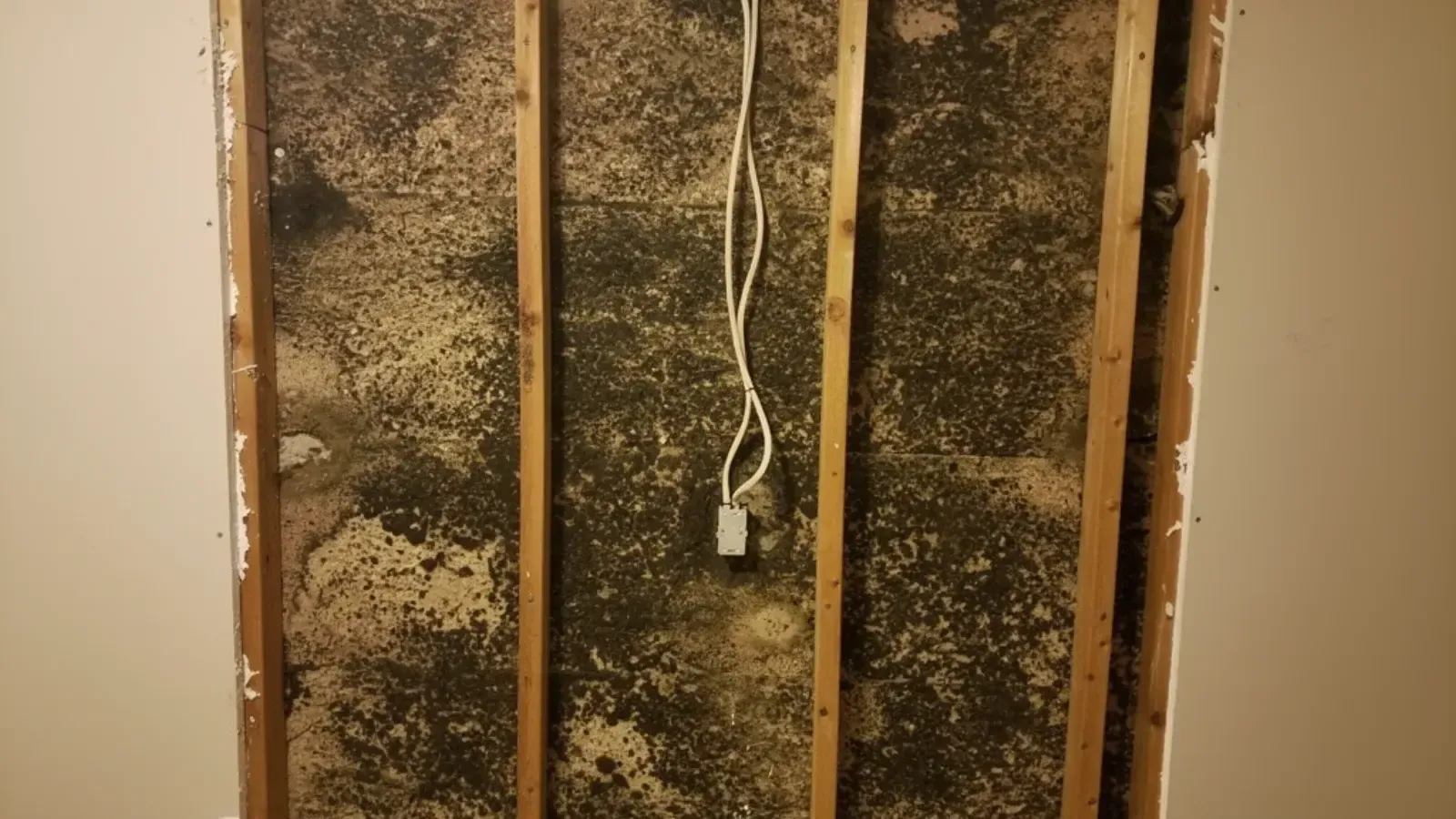
Signs you need this
- • A musty smell in a basement, closet, or back bedroom that doesn't go away with airing the room out.
- • Dark speckling or a black-and-green patch spreading across a section of drywall, often low on a wall or behind furniture that's been pushed against it.
- • Staining or discoloration along a baseboard or around a window that keeps returning after being wiped or painted over.
New Bedford Drywall & Plaster removes drywall that mold has taken hold in, treats the framing behind it, and rebuilds the wall with mold-resistant board so the problem doesn’t come back in the same spot. The work starts with containment so spores don’t spread through the rest of the unit while the affected board is cut out and bagged. Once the framing is treated and confirmed dry, New Bedford Drywall & Plaster hangs new board, tapes and finishes it to match, and can provide documentation for a landlord’s file or a real estate closing.
This service is for landlords managing North End triple-deckers along Acushnet Avenue and the surrounding rental-heavy blocks who need a unit cleared of mold and re-rentable on a tight turnover schedule. It is for homeowners citywide with damp basements, common in New Bedford’s older foundations sitting close to the water table, where moisture wicks into finished basement walls year-round, and for buyers and sellers who got a mold flag during a home inspection and need documented remediation and drywall replacement before the sale closes. It also fits property managers who found a slow hidden leak, behind a plumbing wall, under a window, or from a roof issue, that fed mold growth on the back of the drywall unnoticed for months.
Materials & standards
Products & materials we use
- purple/mold-resistant board (M2Tech)
- DensArmor
- National Gypsum Gold Bond
- RedGard
Standards & codes we work to
- Massachusetts State Building Code (780 CMR)
- ASTM C1396
- EPA RRP (pre-1978 lead-safe)
- MassDEP
What the terms mean
- containment
- negative airflow
- cut-out and replace
- mold-resistant board
- framing treatment
- moisture reading
- turnover clearance
Options & variants
| Option | When it applies | Cost |
|---|---|---|
| Surface clean and seal | Small, non-porous surface mold with no board saturation | Lowest; cleaning and sealing, minimal or no tear-out |
| Cut-out and replace | Mold has penetrated the drywall's paper facing over a defined area | Moderate; containment, targeted removal, new mold-resistant board |
| Basement wall full rebuild | Widespread mold across a finished basement from chronic dampness | Higher; larger tear-out, framing treatment, full mold-resistant rebuild |
| Landlord turnover clearance | Rental unit needs mold cleared and documented fast between tenants | Scoped to turnover timeline, with written documentation included |
What affects cost
- • How far the mold has spread behind the board before it was found, since hidden growth inside a wall cavity costs more to address than a visible surface patch.
- • Whether the moisture source, a leak, condensation, or basement dampness, needs to be fixed alongside the drywall work, since replacing board without addressing the source just brings mold back.
- • Containment requirements, which are more involved in an occupied unit than in a vacant one between tenants.
- • Basement work versus living-space work, since basement walls near the water table often need a broader mold-resistant rebuild rather than a small patch.
- • Whether documentation is needed for a landlord's records or a real estate transaction, which adds a reporting step to the job.
What to expect
- 1
Inspect and scope
New Bedford Drywall & Plaster inspects the affected area, checks how far the growth extends behind the visible surface, and identifies the moisture source if it isn't already known.
- 2
Seal off containment
The space is contained with plastic sheeting and negative airflow where needed so spores don't spread to the rest of the unit while work is underway.
- 3
Remove and bag
Affected drywall is cut out, bagged, and removed, along with any insulation the mold has reached.
- 4
Address the source
The exposed framing is treated and allowed to dry, with moisture readings checked before anything closes it back up.
- 5
Rebuild with mold-resistant board
New mold-resistant board is hung, taped, and finished to match the surrounding wall.
- 6
Clean and explain
The area is cleaned, and on landlord or sale-related jobs, documentation of the work is provided for the file.
When this isn’t the right call
- If the wall is wet from an active leak but no mold has grown yet, that's water damage drywall repair, catching the problem before it reaches this stage.
- If the affected surface is original lath-and-plaster in a historic home rather than drywall, that's plaster repair, handled with different containment and finish methods.
- If mold has spread well beyond the drywall into HVAC ductwork or a large-scale structural area, the job may need a dedicated mold remediation firm to run air quality testing first, with New Bedford Drywall & Plaster handling the drywall rebuild afterward.
Frequently asked questions
How do I know if it's actually mold or just a water stain? +
A water stain is flat discoloration with no texture. Mold usually has a raised, fuzzy, or speckled look and comes with a musty smell that doesn't fade. New Bedford Drywall & Plaster can tell the difference on inspection and will say plainly which one it is.
Can you just clean the mold off instead of replacing the drywall? +
If it's a small, surface patch that hasn't penetrated the paper facing, cleaning and sealing can work. Once mold has gotten into the paper or the board is damp behind it, cleaning alone won't stop it from coming back, and the section has to come out.
I'm a landlord with a unit turning over in a week. Can this be done that fast? +
Turnover mold jobs are treated as a priority, since re-renting on schedule depends on it. The exact timeline depends on how much board is affected, but New Bedford Drywall & Plaster works to a turnover deadline whenever possible.
Will you test the air quality or just replace the drywall? +
New Bedford Drywall & Plaster removes and rebuilds affected drywall. For a large or ambiguous case, especially one involving HVAC or a whole floor, a dedicated remediation firm should run air testing first, and the drywall rebuild follows once that's cleared.
My basement gets a mold smell every summer even though it doesn't flood. Is that still something you handle? +
Yes, chronic basement humidity without an active flood is a common cause of mold on finished basement walls in New Bedford's older foundations. The drywall gets replaced with mold-resistant board, though a lasting fix usually also means addressing the humidity source.
Do you provide paperwork for my insurance or for a home sale? +
Yes. New Bedford Drywall & Plaster can document the work performed for a landlord's file, a real estate closing, or an insurance claim tied to the mold issue.